BOM
BOM
 My Request
Common Electronic Component Selection Mistakes That Affect PCB Design
Contents
Many PCB problems are not caused by circuit design errors. They often start earlier, during the component selection stage.
A component may meet the basic requirement on paper but still create issues after assembly. Even a small difference in package type, temperature rating, or electrical specifications can affect the final design.
This is why electronic component selection requires careful checking before a part is added to a BOM.
Similar Voltage Does Not Mean the Same Performance
Voltage is often the first specification engineers look at, but it should never be the only one.
For power devices such as LDOs and MOSFETs, input voltage range, power loss, and operating conditions are equally important.
For example, a 3.3V regulator used in a low-power control board may not be suitable for another design with higher input voltage or higher current demand. Devices such as MIC5504-3.3YM5-TR and TLV1117LV33DCYR Both devices are 3.3V regulators, but their input conditions, package options, and electrical characteristics are different.
Checking only the output voltage can lead to incorrect selection.
Package Changes Can Affect the Entire PCB
A common issue in PCB projects is selecting a component that works electrically but does not match the board design.
Semiconductor manufacturers often release the same series in different packages, such as SOT-23, QFN, TSSOP, or SOIC.
These versions may have different:
· Pin layouts
· Thermal performance
· PCB footprint dimensions
A replacement IC with a different package may require a new PCB layout, which increases development time and manufacturing cost.
For this reason, package information should always be checked together with the electrical specifications.
Similar Specifications May Hide Important Differences
A frequent mistake in PCB component selection is choosing a replacement based on only a few numbers.
MOSFET selection is a typical example. Two MOSFETs may have the same voltage and current ratings, but differences in RDS(on), gate charge, and switching speed can change circuit performance.
Capacitors also require careful evaluation. The same capacitance value does not always mean the same application performance. Voltage rating, tolerance, temperature characteristics, and lifetime can be different between product series.
A complete component specification review is necessary before making a replacement decision.
Temperature Rating Should Match the Application
Temperature ratings are often overlooked during component selection.
A component suitable for consumer products may not perform well in industrial equipment or applications with large temperature changes.
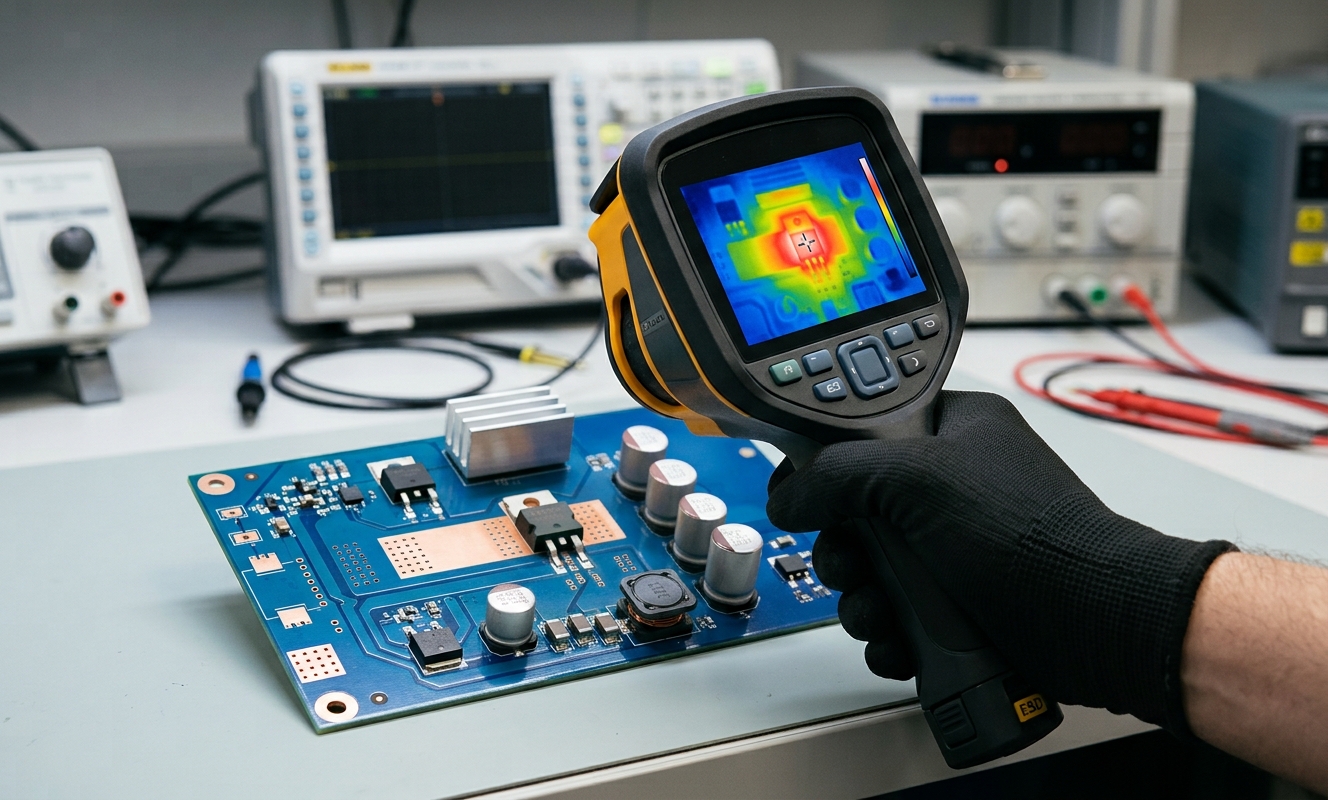
When selecting MCUs, LDOs, MOSFETs, and other semiconductor devices, engineers should consider the actual working environment, including operating temperature and thermal conditions.
Choosing the wrong grade may create reliability problems after the product enters the market.
What Engineers Should Check Before Final Component Selection
A practical PCB design component selection guide should not only focus on electrical parameters. Engineers should also check:
· Exact part number
· Package compatibility
· Operating conditions
· Supply availability
The right component choice reduces redesign work and avoids problems during production.
In electronics manufacturing, selecting a component is not simply finding a part with similar specifications. It is about finding a device that fits the circuit, the PCB, and the long-term production plan.