BOM
BOM
 My Request
Automotive-Grade vs. Industrial-Grade Components: What's the Difference and Can You Swap Them?
Contents
Differences Between Automotive-Grade and Industrial-Grade Components
Automotive-grade and industrial-grade components may use the same silicon die but carry different part numbers or suffixes. For many Texas Instruments devices, the automotive-qualified version carries the Q1 suffix, while the industrial version uses the standard part number. Other manufacturers may use different naming conventions. Another obvious difference is the price, which can be 30% higher or more for the automotive version. It seems that they are identical on the datasheets. In fact, the differences are in testing, temperature range and documentation.
The Datasheet Doesn't Tell the Whole Story
If you look through the datasheets of ISO7741DWR and ISO7741FQDWRQ1, you will find that electrical specs are nearly the same. They have the same 5000 Vrms isolation, the same 10.7 ns propagation delay and the same 4 channels. Both are four-channel digital isolators. The same is true for the CAN FD transceivers TCAN1051DR and TCAN1051DRQ1.
The difference is not in the silicon itself, but in what happens after the silicon comes out of the fab. Automotive-grade parts are subjected to 100% final testing at cold, room, and hot temperatures. By comparison, industrial-grade parts are tested at selected conditions and characterized for the remaining operating range. In other words, the silicon die may be the same. What is truly different is the testing standards which drive the price gap.
What's the Difference
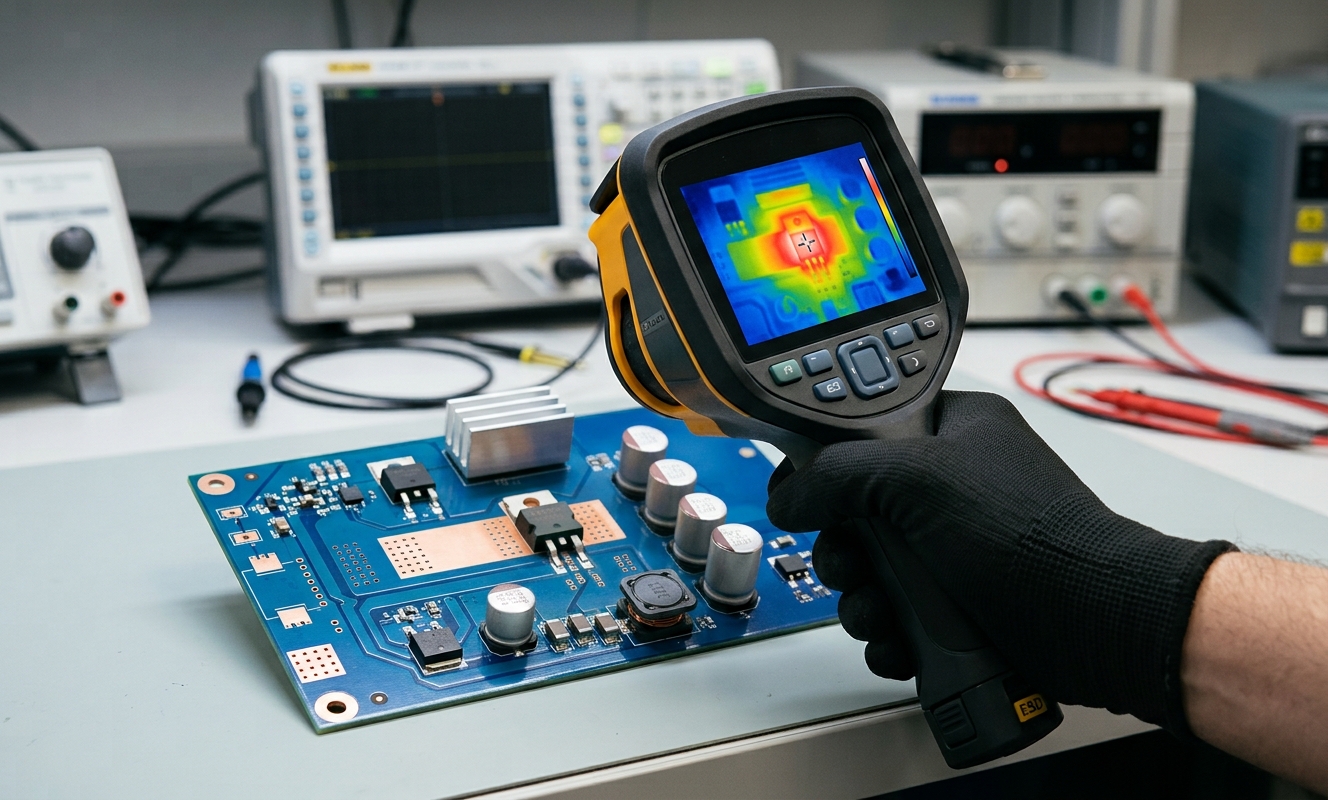
Temperature range is the starting point. Industrial parts are usually rated from -40°C to +85°C, sometimes +105°C. Automotive parts go to +125°C usually, sometimes +150°C junction temperature. If your product sits in a temperature-controlled room, the industrial part is enough.
But it is widely misunderstood that an industrial part might work at 105C. It's just not guaranteed by manufacturers. In a prototype, it might pass. In production, however, the failure rate at temperature is higher and not consistent from lot to lot. The automotive parts have been screened for these edge cases, so they are qualified to operate reliably at higher temperatures. The industrial parts have not.
Qualification Is where the real difference lies. AEC-Q100 is not just a sticker. It means the part has passed a standardized set of reliability tests: high-temperature operating life (over 1000 hours), temperature cycling, biased HAST, ESD characterization. The manufacturer provides a PPAP package documenting all the qualification results.
For example, if you are supplying a Tier-1 automotive customer and your BOM uses an industrial-grade part, you will not pass the PPAP review. Even if the part works electrically, because the required qualification documentation is not available.
When Can You Swap Them
For prototypes and lab testing, industrial parts can completely meet the requirements. But the production BOM needs the Q1 parts. During the 2021 global chip shortage, a lot of manufacturers used the automotive one to replace the industrial one, however. It works electrically. The only downside is that you have to pay more than you need to since you buy a more qualified one.
In a word, replacing the industrial-grade one with an automotive one is okay. The reverse is not recommended.
How to Decide
If your product ships with an automotive warranty, use the Q1 part. If it plugs into a wall outlet and stays indoors, the industrial part is fine. For applications with mixed requirements, check the temperature requirements and ask your customer what qualification documents they need. The silicon die is often identical. The testing and the paperwork are not. And that is what the suffix is telling you.
Both Grades Available at XMAGELEC
We carry industrial and automotive versions side by side. The following products mentioned in this article are available:
ISO7741DWR (industrial) / ISO7741FQDWRQ1 (automotive):
4-channel digital isolator, 5000 Vrms, 16-SOIC. Both grades are in stock.
ISO6741DWR (industrial) / ISO6741FQDWRQ1 (automotive):
Functional safety rated digital isolator. Both grades are available.
TCAN1051DRQ1: CAN FD transceiver with AEC-Q100 certification, -40°C to +125°C, 8-SOIC.