BOM
BOM
 My Request
1N4148 SMD Replacement Guide: SOD-123 vs SOD-323 and SOT-23 Options
Contents
- The Suffix Can Change the Package
- SOD-123 vs SOD-323: The Smaller Package Has a Cost
- Does 1N4148WS Have the Same Electrical Performance as 1N4148W?
- What About SOT-23 Versions?
- A Practical Cross-Reference
- What Should Be Checked Before Ordering?
- Can Two 1N4148 Diodes Be Replaced by One SOT-23 Device?
- My Approach to a 1N4148 Replacement
- Looking for a Suitable 1N4148 Alternative?
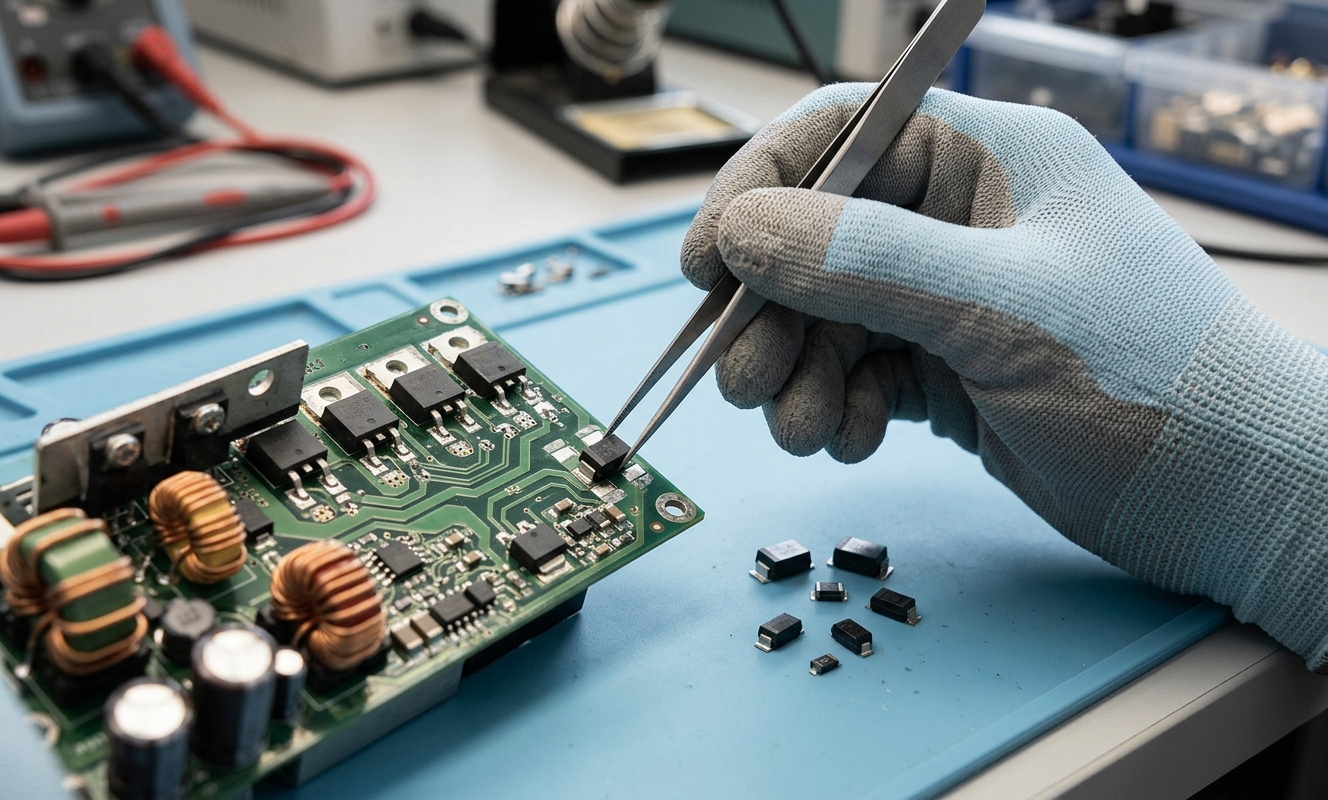
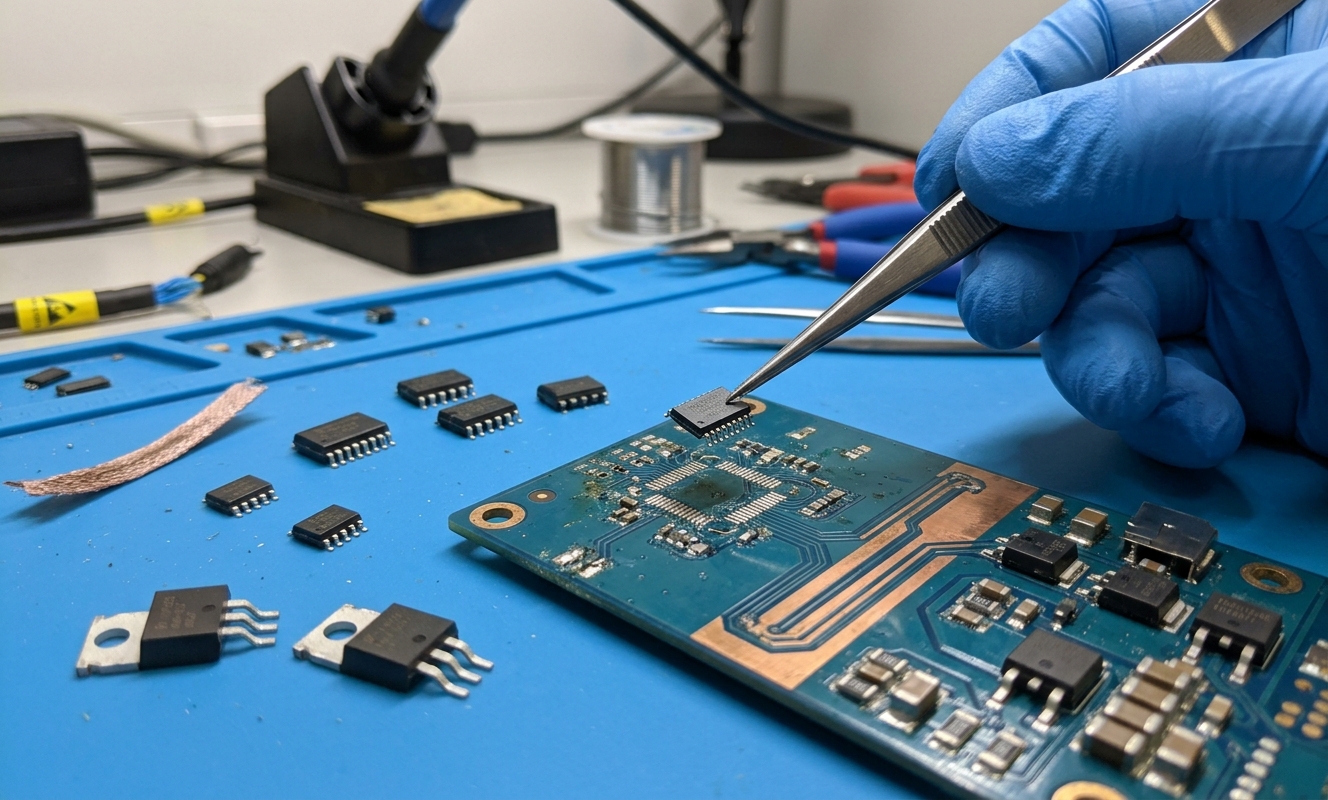
The 1N4148 is one of the most familiar small-signal switching diodes in electronics. The original device is commonly associated with the DO-35 glass axial package, but modern PCB designs often use surface-mount versions.
That is where sourcing can become confusing.
A buyer may search for "1N4148" and find1N4148W, 1N4148WS, MMBD4148and several other order codes. They may all look like reasonable substitutes, but the package, pin arrangement, power dissipation and electrical specifications can be different.
The first question should therefore be:
Does the replacement actually fit the existing PCB?
That sounds obvious, but a package mismatch is enough to stop an SMT production line.
The Suffix Can Change the Package
A good example is the difference between1N4148Wand1N4148WS.
Vishay lists 1N4148W inSOD-123, while 1N4148WS is supplied inSOD-323. Both are fast switching diode versions with 100V repetitive peak reverse voltage and a maximum reverse recovery time of 4ns in the cited datasheets. Their package sizes and power ratings, however, are different.
Diodes Incorporated also lists1N4148W-7-Fas a 100V, 300mA SOD-123 switching diode with a 4ns maximum reverse recovery time.
This means the part number suffix is not just a catalog detail.
If the PCB footprint was designed for SOD-323 and purchasing orders an SOD-123 version, the electrical characteristics may look acceptable while the component still cannot be assembled on the board.
That is why a1N4148W vs 1N4148WS footprint differenceshould be checked before comparing price or availability.
SOD-123 vs SOD-323: The Smaller Package Has a Cost
SOD-123 is physically larger than SOD-323.
That larger body can provide greater power dissipation capability. For example, Vishay's current 1N4148W datasheet specifies 280mW on its recommended FR-4 board, while its 1N4148WS datasheet specifies 200mW. Both are rated for 100V repetitive peak reverse voltage and 4ns maximum reverse recovery time in those respective documents.
This is an important point when considering a1N4148 SOD123 to SOD323 drop-in replacement.
The smaller package may work perfectly in a low-power switching application, but the lower package power rating needs to be considered when the diode carries substantial average current or experiences higher power dissipation.
So I would not assume that moving from SOD-123 to SOD-323 is an electrically neutral package change.
Does 1N4148WS Have the Same Electrical Performance as 1N4148W?
Not necessarily across every manufacturer.
Within Vishay's two current datasheets, both versions specify 100V VRRM and 4ns maximum tRR, but other parameters such as continuous current and power dissipation differ.
Diodes Incorporated's 1N4148W also uses 100V and 4ns as key specifications, but its published current and power figures are not identical to every other manufacturer's version.
This is why I would avoid treating "1N4148" as one universal electrical specification.
For a production BOM, the complete manufacturer part number and datasheet matter.
What About SOT-23 Versions?
Another option is moving from a single diode package to a multi-diode SOT-23 device.
Onsemi'sMMBD4148family is a good example. ItsMMBD4148CAis a common-anode configuration, whileMMBD4148CCis common-cathode. The family also includesMMBD4148SE, a series configuration. Onsemi specifies these devices in SOT-23 with 100V reverse-voltage capability and 200mA forward-current rating.
This can save PCB area when a design needs two small switching diodes.
But it is not a simple one-for-one replacement for a single 1N4148W.
The internal connection is different.
A designer replacing two discrete diodes with one SOT-23 device needs to check whether the circuit needs:
· Common anode
· Common cathode
· Series connection
· Two electrically independent diodes
For example, onsemi'sMMBD4148CAuses a common-anode configuration, whileMMBD4148CCuses a common-cathode configuration.
That distinction matters more than the package name.
A Practical Cross-Reference
|
Part Number |
Manufacturer |
Package |
Configuration |
VRRM |
tRR |
|
Diodes Incorporated |
SOD-123 |
Single |
100V |
4ns |
|
|
Vishay |
SOD-123 |
Single |
100V |
≤4ns |
|
|
Vishay |
SOD-323 |
Single |
100V |
≤4ns |
|
|
onsemi |
SOD-323FL |
Single |
Check exact datasheet revision |
4ns class |
|
|
onsemi |
SOT-23 |
Dual, common anode |
100V |
4ns |
|
|
onsemi |
SOT-23 |
Dual, common cathode |
100V |
4ns |
The table is useful for narrowing a search, not for declaring all parts drop-in compatible. Exact ordering codes, package drawings and test conditions should be checked before approval.
What Should Be Checked Before Ordering?
When a purchasing team asks for anSMD switching diode cross reference guide, I would check the following in this order.
First is thepackage and footprint.
Then check the actual electrical requirements:
· Reverse voltage
· Forward current
· Forward voltage
· Reverse recovery time
· Power dissipation
· Reverse leakage
· Junction temperature
For switching applications, reverse recovery time matters. Diodes Incorporated specifies a 4ns maximum for its 1N4148W example, and Vishay gives the same 4ns maximum class for both 1N4148W and 1N4148WS.
For a simple logic circuit, a small difference in forward voltage may not matter. For a timing-sensitive or higher-frequency circuit, recovery and capacitance deserve closer attention.
Can Two 1N4148 Diodes Be Replaced by One SOT-23 Device?
Sometimes, yes.
This is one of the useful advantages of parts such asMMBD4148CA, MMBD4148CC or MMBD4148SE.
But saving board space is only worthwhile when the internal diode connection matches the original circuit.
A two-diode SOT-23 solution may reduce component count and PCB area, but it can also make future replacement more specific because the buyer now needs the correct dual-diode configuration.
For this reason, I would confirm the schematic connection before changing from two discrete diodes to a dual-device package.
My Approach to a 1N4148 Replacement
I would not treat1N4148W, 1N4148WS and MMBD4148as interchangeable parts.
The first two are single-diode SMD options in different packages. The MMBD4148 family adds multiple diode configurations in SOT-23.
For an existing PCB, the footprint comes first.
After that, compare voltage, current, power dissipation, recovery time and leakage under the actual operating conditions.
For procurement, the full MPN should remain on the BOM. "1N4148" is not enough when the package and manufacturer matter.
That is also the safer way to handle an1N4148WS alternativeor a1N4148W-7-F pin to pin alternative: verify the footprint and complete electrical specification rather than relying on the shared base name.
A small diode may look like a simple commodity part, but the wrong package can stop production just as easily as the wrong electrical rating can damage a circuit.
Looking for a Suitable 1N4148 Alternative?
Have a hard-to-source diode or need a second source for an existing design? Send us yourMPN or BOM, and we can help review suitableSOD-123, SOD-323, or SOT-23 alternatives and current sourcing options.