BOM
BOM
 My Request
Why IC Package Selection Matters More Than Many Engineers Expect
Contents
- Common IC Package Types
- DIP: Still Useful When Simplicity Matters
- QFP: A Practical Option for Industrial Designs
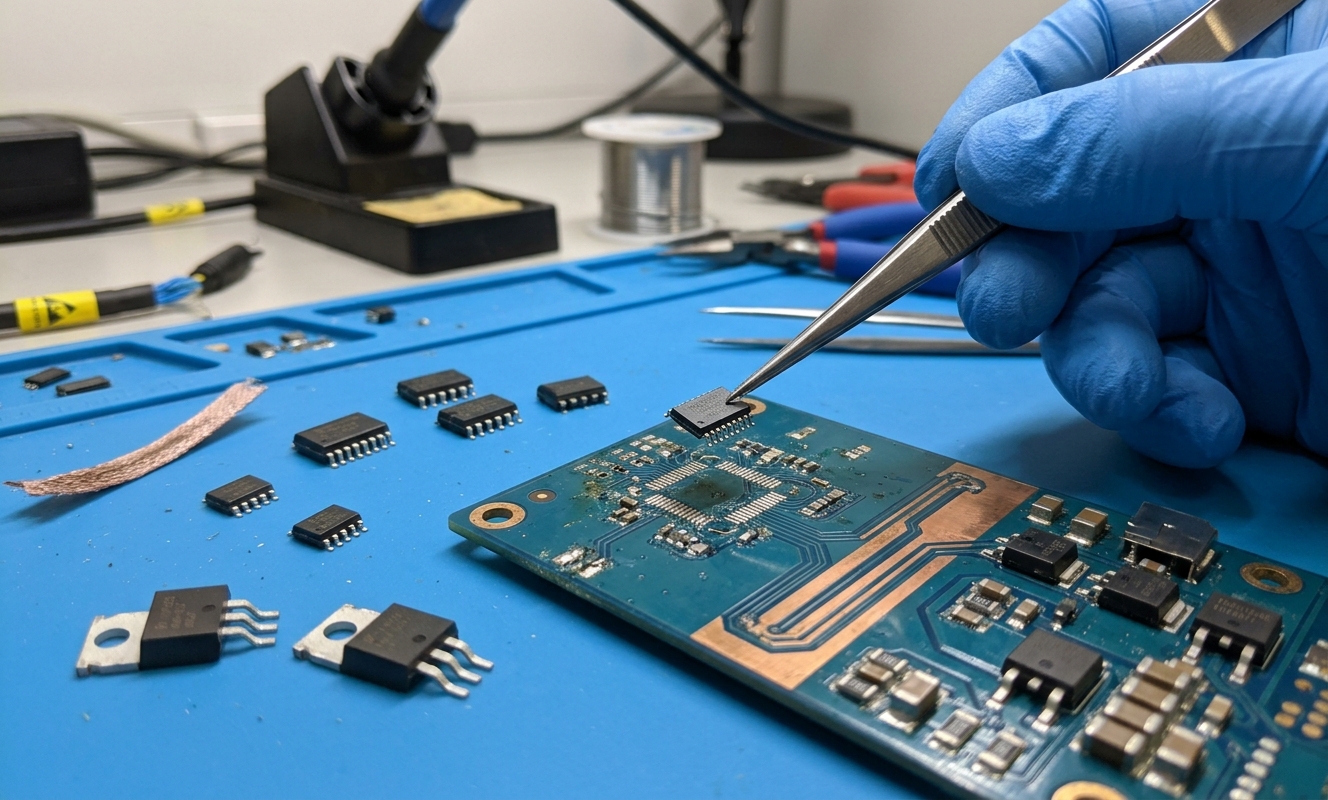
- QFN: Smaller, but More Demanding to Inspect
- BGA vs QFN: Which One Makes More Sense?
- Package Choice Also Affects Component Sourcing
- How I Approach IC Package Selection
- Final Thoughts
- Looking for ICs in a Specific Package?
When engineers choose an IC, the first things they usually check are voltage, speed, memory, current, and price.
The package often comes later.
That can be a problem. The package affects much more than the physical size of the chip. It can influence PCB layout, thermal performance, assembly cost, inspection, and even future component sourcing.
A small package may save board space, but it may also make assembly and inspection more difficult. A package designed for high performance may work well electrically but require a more expensive manufacturing process.
So package selection should not be based on size alone. The right package is the one that fits the electrical design, PCB, manufacturing process, and expected product lifetime.
Common IC Package Types
DIP, QFP, QFN, and BGA are still widely encountered in electronics design, but they serve very different purposes.
| Package | Main Advantages | Main Limitations | Typical Applications |
|---|---|---|---|
| DIP | Easy to solder and inspect, simple for prototypes | Large footprint, limited density | Prototypes, education, legacy equipment |
| QFP | High pin count, visible leads, easy inspection | Takes more board space, leads can be damaged | MCUs, industrial control |
| QFN | Compact, short electrical paths, good thermal performance | Solder joints are hidden | Power ICs, wireless devices, compact products |
| BGA | High pin density, good electrical performance | More difficult assembly and inspection | Processors, memory, high-end MCUs |
There is no package that is best for every design. The choice depends on what the product needs.
DIP: Still Useful When Simplicity Matters
DIP is an older package style, but it has one major advantage: it is easy to work with.
The leads are visible, soldering is straightforward, and inspection can be done without special equipment. That makes DIP useful for prototypes, laboratory work, and some legacy products.
The trade-off is size. Compared with modern surface-mount packages, DIP uses significantly more PCB space and is not a good fit for high-density designs.
For a prototype where easy testing and repair matter, DIP can still be a practical choice.
QFP: A Practical Option for Industrial Designs
QFP offers a good middle ground between traditional DIP packages and smaller leadless packages.
Its leads are placed around the edge of the package, so they can be inspected after assembly. This is useful in production because AOI systems can detect many soldering problems without requiring X-ray inspection.
QFP also supports higher pin counts than DIP and works well with standard SMT processes.
The downside is that the external leads take up board space and can be damaged during handling. Longer electrical paths can also become a consideration in some high-speed designs.
For MCUs and industrial controllers, however, QFP remains a practical option when manufacturing simplicity is important.
QFN: Smaller, but More Demanding to Inspect
QFN is widely used when PCB space is limited.
Because it has no traditional leads extending from the package sides, the footprint can be smaller. The shorter electrical connections can also help reduce parasitic effects, while the exposed pad on some QFN packages can provide a useful thermal path.
The main issue is inspection.
The solder joints are underneath the package, so visual inspection is limited. Production may require better stencil design, reflow control, and inspection methods.
This does not make QFN a bad choice. It simply means the assembly process needs to match the package.
For high-volume manufacturing with a well-controlled SMT process, QFN can be an excellent option.
BGA vs QFN: Which One Makes More Sense?
BGA and QFN are often compared when a design needs a compact package.
BGA has a major advantage in pin density. The solder balls are arranged underneath the package, allowing many more connections within a relatively small area. This is why BGA is common in processors, memory devices, FPGAs, and high-end MCUs.
But that density comes with additional manufacturing requirements.
BGA designs often need tighter PCB layout rules and more advanced inspection, including X-ray inspection. Rework is also more difficult than with many leaded packages.
QFN is generally simpler when the pin count is lower and the design does not require the connection density of BGA.
So the choice between BGA and QFN should come from the electrical and mechanical requirements, not simply from package size.
Package Choice Also Affects Component Sourcing
Package selection is sometimes overlooked during procurement.
An IC may be available in several package options, but those versions do not always have the same market availability.
One package may be easy to source from multiple suppliers, while another may have limited stock or fewer alternatives. This becomes especially important for products expected to remain in production for several years.
Before finalizing a package, it is worth checking:
- Whether the package is widely produced
- Whether alternative sources are available
- Whether another package could be accepted later
- How much PCB modification would be required if the package changes
This is particularly important for long-life industrial products, where replacing an IC several years later may be more difficult than expected.
How I Approach IC Package Selection
I would normally look at package selection in four steps.
First, make sure the IC meets the electrical requirements.
Next, check the PCB area and thermal conditions.
Then, confirm that the assembly supplier can handle the package consistently.
Finally, look at future availability and replacement options.
For example, QFN can make sense when board space is limited. QFP may be preferable when easy inspection and production simplicity are priorities. BGA is often necessary when pin count and electrical performance become more demanding.
The smallest package is not automatically the best one.
Final Thoughts
IC package selection affects more than PCB size. It can influence assembly, inspection, thermal behavior, production cost, and future sourcing.
That is why DIP, QFP, QFN, and BGA should not be treated as simple size alternatives.
The better approach is to choose the package that works across the entire product lifecycle-from the first prototype to volume production and future component sourcing.
A good IC choice is not just about finding the right chip. It is also about choosing a package that the whole design can support.
Looking for ICs in a Specific Package?
Need help sourcing DIP, QFP, QFN, BGA, or another IC package? Send us your part number and requirements, and our team can help check availability and suitable sourcing options.